
The following was submitted by Brian Reynolds. More photos from the Hart/Reynolds Family History Collection can be viewed in our online catalog by clicking here.
My name is Homer T. Hart. The “T” is for Thomas. I was born near Farmersville, California, in 1898. I was a sickly child, so my parents decided a trip to the mountains might help. My family had been camping in the Mineral King Valley for about ten years. We traveled from Farmersville to Mineral King in wagons drawn by horses and mules, taking three days to get there. In those early days, the Kaweah River Bridge had not yet been built and we traveled the old road, on the north side of the Middle Fork of the Kaweah River.
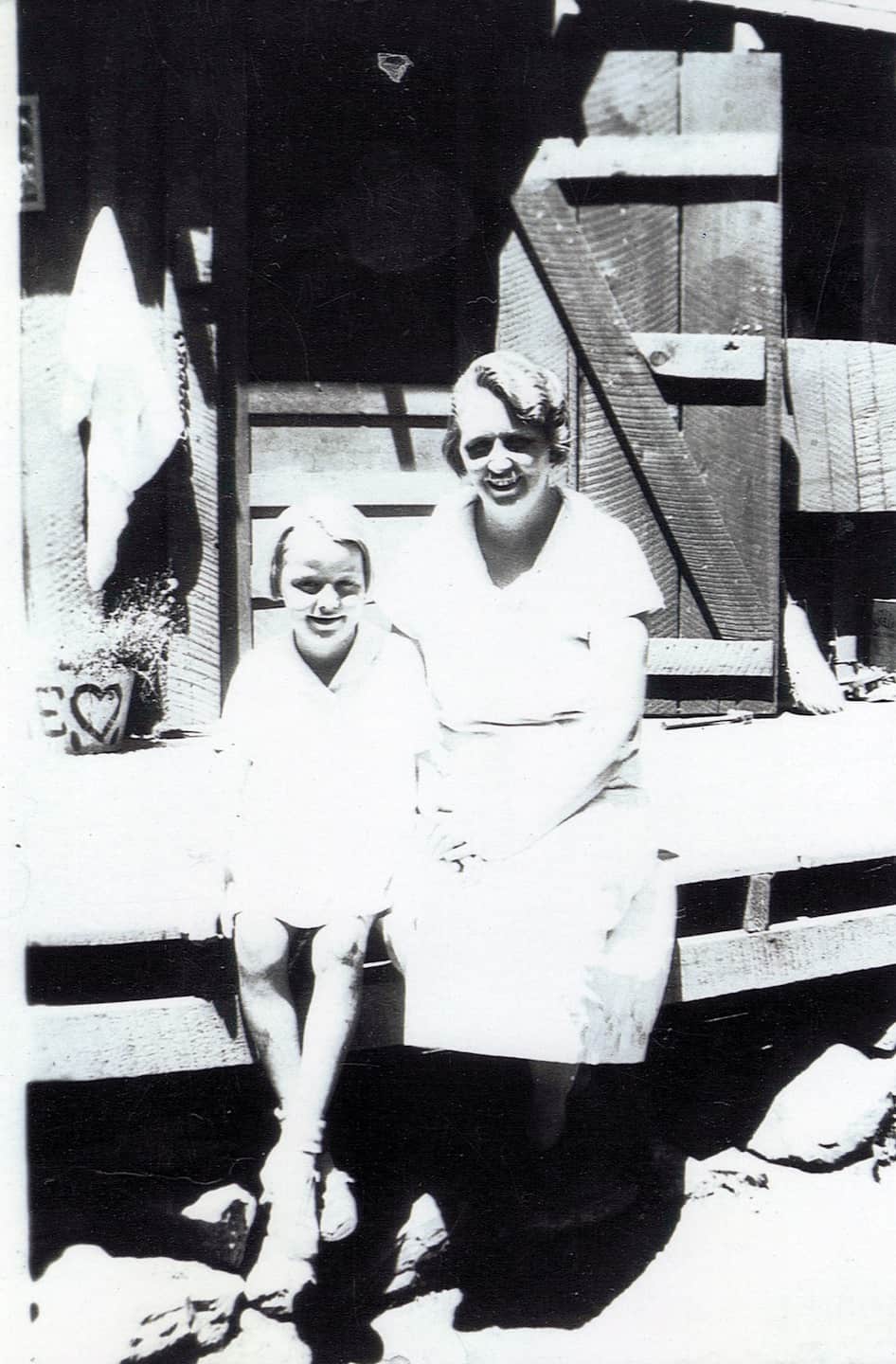

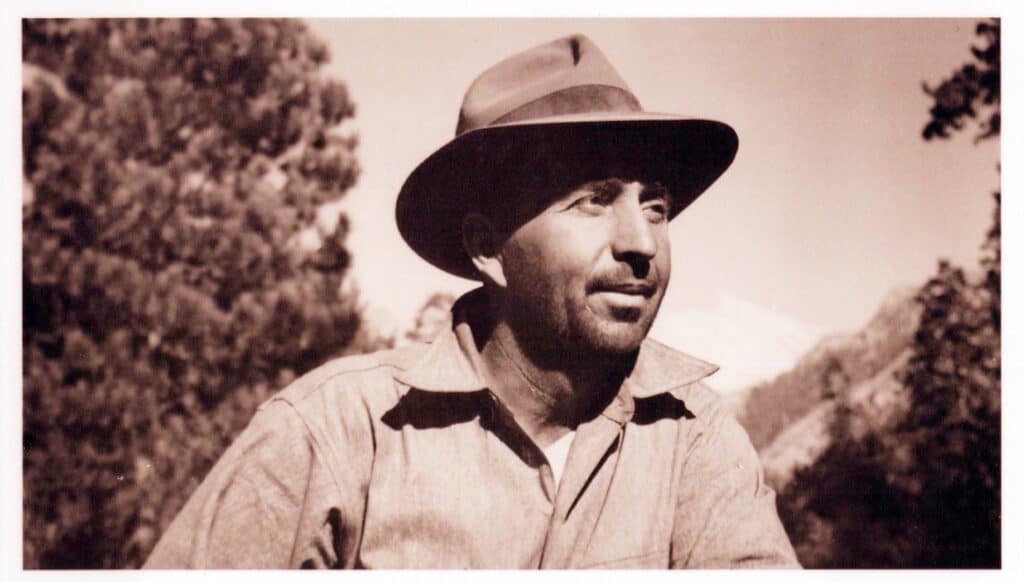
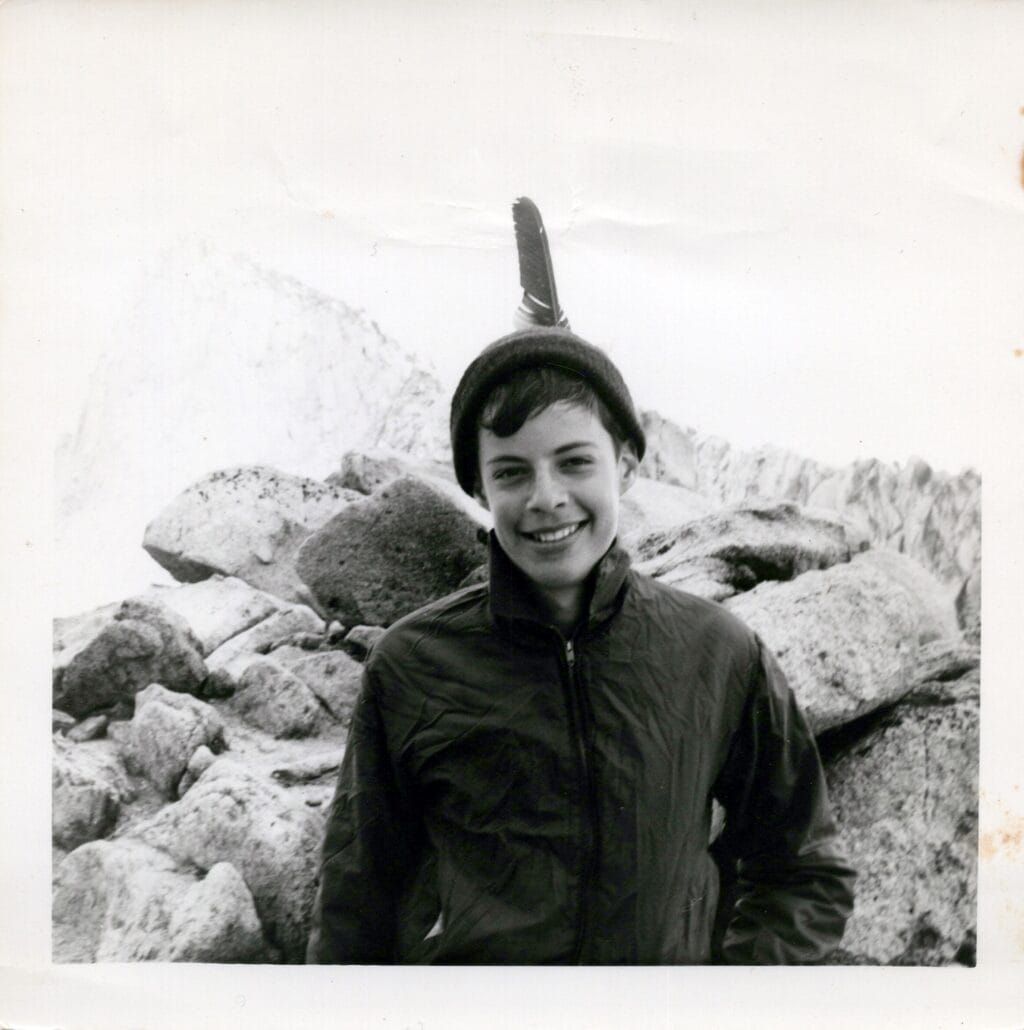

I would like to tell you a little bit about me and my family. My father was Edwin Finley Hart. Born in Missouri in 1860, he traveled west to California as a young man. His father, Amos Hart, had already visited San Francisco and other parts of California during the 1848 Gold Rush. It is said that Amos Hart built the first tongue-in-groove floor in San Francisco, and participated in a vigilante lynching in Hangtown (Placerville).
My father married Martha Ellen Frans, who was from Ivanhoe. Together they raised severn children: three girls and four boys: Frances (Fannie was the oldest child). Then, in order, Charles Edwin; Hugh, Elizabeth (Betty), Virgil, myself, and Ruth. The Hart family camped in Mineral King for many years before any family cabins came were built. The first Hart cabin was built by Hugh in 1909. Ultimately, there were six cabins related to the Harts in west Mineral King. Besides Hugh and Jessie Hart’s cabin, there were: the Hester cabin (Fannie and Ed Hester); Edwin and Belle Hart’s cabin; Elizabeth and Les Avery’s cabin; the Bissiri Cabin (Edwin’s daughter Nadean married Paul Bissiri). In 1923, Beulah and I bought a cabin next to brother Hugh’s cabin, which had been built by Mr. Herman Bechtel in 1921. Apparently, Mr. Bechtel’s wife didn’t take to the mountains.
Our cabin, #7, was small: one room only. Constructed from lumber sawn at Atwell’s Mill, it was built using a balloon design (where the weight of the roof rests not on beams but the exterior walls), with a board and batten exterior. Beulah and I slept in a Murphy bed and our daughter Marilyn, nearby in a single bed. We doubled the size of the cabin in 1940, adding a master bedroom off the kitchen and living room area. We also used a generator for electric lights, when many/most cabins used propane lamps.
Those early days, of camping and sharing good times around our cabins, were marvelous. Given the arduous trip “up the hill,” the family would spend several weeks at altitude, avoiding some of the typical hot, summer weather “down the hill.” Hiking, fishing, deer hunting, and pack trips into the back country were common pastimes. On one trip to the Kern River Canyon, about 1920, my father and the rest of us were riding down Rattlesnake Canyon and a Ranger caught up with us. The Ranger asked: “Mr. Hart, did you and your party camp last night up Rattlesnake Creek? Someone left a campfire smoldering. That is going to cost you a $50 fine!” I daren’t tell who was responsible for putting out the campfire, but it wasn’t me!!
When I was a soldier in World War I, I was stationed as a guard for a smelter just west of Salt Lake City, Utah, a town called Tooele. There, I met my future bride, Beulah Howell. She was the daughter of James and Hattie Howell. James was a cobbler, an immigrant from Kent, England. Hattie hailed from Anniston, Alabama. During our courtship I asked Beulah if she liked the mountains because that was a requirement of mine…any future wife of mine must like the mountains. Well, Beulah and I were married in 1920, in Hollywood, California. We spent a lifetime together in Mineral King. I was a farmer my entire life, starting with prunes, and then on to walnuts and cotton. Beulah taught in local schools for many years and handled the farm’s financial matters.
Our daughter Marilyn Hart was born in 1925. She came to love the mountains just as much as the rest of the Hart family. Here is a story about Marilyn and her cousin Nadean as teenagers: One day they decided they would ride to Uncle Hugh’s camp at Rifle Creek. They would ride about fifteen miles in and out, over Farewell Gap. Late in the day, when they were approaching the Gap, coming home, they got caught in a cold rainstorm. Not having any bad weather gear or heavy coats, they arrived back in Mineral King blue with cold, shivering, and very sorry they hadn’t planned better for the conditions.
Marilyn was a very bright child, a tomboy in many ways. She enjoyed going below the Falls to catch native trout. Typically, she would catch more than the limit. Returning home, she would hide the excess trout beside the trail, just below the Bissiri cabin, until she could ascertain that the Game Warden was not around. Marilyn attended Mills College in Oakland, and then Stanford, where she met her future husband, William Reynolds.
William (known as “Bill” in those days) hailed from Critz, Virginia and was attending Stanford on the GI Bill, having served in the Army in Europe in World War II. Marilyn and Bill had three children, starting in 1950: Brian, Leslie, and Michèle. Taking over from Claude Paregien, Bill served as the Mineral King Summer Ranger for eight years, 1952-60. By himself, Bill maintained the campgrounds (many more campsites in those days), repaired trails, fought wildfires, and rescued injured hikers. During the U.S. Forest Service era, which lasted until 1978, there was always a summer ranger and his family in Mineral King, 24/7. Bill had his own Forest Service horses, but it is important to note that there were two pack stations operating in Mineral King at the time. Very often, the pack stations were instrumental in rescuing injured hikers, besides supplying the trail crews and back country ranger stations. There are no pack stations in Mineral King today.
The Reynolds children grew up in Mineral King, exploring the rivers, streams, lakes, old mines, soda springs, and other attractions of this beautiful valley. The Reynolds boys also followed their father on many hikes in the back country to places like Cliff Creek, Redwood Meadow, and the Kern River Hot Springs. Bill was infamous for suggesting short cuts off and from the regular trail. Sometimes those “cuts” were not short but long, and quite dangerous!
In 1978 a momentous shift occurred: Stewardship of Mineral King was transferred from the Forest Service to the Park Service. One of the important elements of that transfer was a prohibition on transferring ownership of the cabin permits beyond the cabin permittee of 1978. With this in mind, Beulah and I transferred cabin ownership to our grandson Les, who was only 25 years old at the time. Les, Bill and many other people fought a legal battle lasting years to remove the “prohibition” on cabin ownership transfers and were eventually successful.
In about 1960, Beulah and I were getting tired of maintaining the cabin, and Marilyn’s family needed a cabin, so we stopped our regular visits. We knew that the cabin was in good hands and were content. When our grandson Les was very little, I asked him: “Leslie, aren’t you and your brother afraid of the mountains, the bears, the cougars?” Les replied: “Oh, grandad, we’re mountain men.” And, so they were.