
MK Road Corridors
The Mineral King Road Corridor
Historic Points of Interest
Cain's Flat
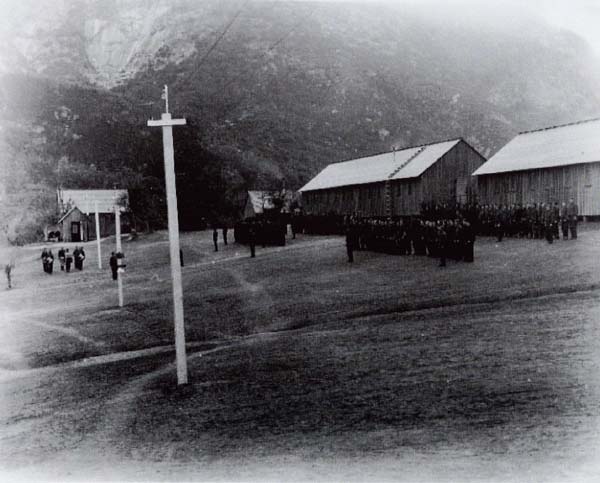
Comer Robertson, at the age of 28, was made foreman of several projects. One of his crews formed the adobe for the ranger stations at the bottom of the Mineral King road and at Look-out Point. His crews also were some that widened and straightened out the road. They fought forest fires, rehabilitated and modernized campsites, improved trails, built housing, and were noted for their search and rescue work.
“My crew brought out quite a few who had been killed,” Robertson recalled in 1983. “All kinds of accidents happened.”
Life at all the CCC camps was a highly structured, military experience. The 16 to 20 year-old workers in the Sequoia region most often were recruited from the east. The Atwell Mill camp had men from Ohio and Kentucky. Robertson’s crew members came from New York, Louisiana and Arkansas.
“They shipped them clear across the country so they wouldn’t run away back home,” he said.
But most never would consider leaving. They had jobs at a time when almost none were available. They were in the company of young comrades like themselves. They were housed and fed and paid. They were given skills and schooling. In 1937, Mr. Hulse’s class of 20 Cain’s Flat Camp student’s received 8th grade graduation diplomas and Sequoia Superintendent, Colonel John R. White attended the ceremony.
The young men worked hard, but they had time to play, too. There were movies and sports for recreation. There were baseball leagues and boxing tournaments. The Cain’s Flat camp joined the Sequoia basketball league, competing with teams from 6 other camps. The production of newspapers was important. Cain’s Flat had two, “The Dog House” and “The Green Light”.
Several bands were formed in the Sequoia camps and they played, not just for CCC functions, but for local community events as well. Dances were held which local girls attended, events most popular with the young men. Army trucks were used to transport the enrollees to the dances in Three Rivers, although Clarence Searcey, a local boy stationed at Cain’s Flat, recalled walking the seven miles down the Mineral King road to attend one.
Most important in keeping the young men happy were the meals. The CCC program was noted for its good food. Oil ranges were used for cooking and wood ovens for baking. Those ovens turned out white, rye and graham breads, pastries of all kinds including cookies, snails, buns, doughnuts, and other sweets. Several kinds of pastry were served at each meal because “…Pastry keeps the men well contented and because of the high sugar content it has a high food value.”
In 1936, a typical camp’s menu on one day was the following. Breakfast: bran flakes, fried ham and gravy, fried eggs, fried potatoes, hot cakes, butter toast, syrup, jam, coffee, milk, sugar. Lunch: vegetable soup, roast beef, brown gravy, assorted cold meats, mashed potatoes, cabbage slaw, creamed peas, lettuce salad, tomatoes, mince pie, doughnuts, coffee, milk, iced tea, buttermilk. Dinner: vegetable beef soup, roast pork and jelly, baked beef heart and dressing, German fried potatoes, steamed carrots, celery, cottage cheese, sliced beets, mince pie, cupcakes, coffee, milk, ice tea, buttermilk.
For young men who had known deprivation and hunger, even the hot, hard, physically demanding work and isolated life at Cain’s Flat CCC camp must have seemed close to heaven. It was reported the average enrollee gained 12 to 30 pounds during his tour of duty.
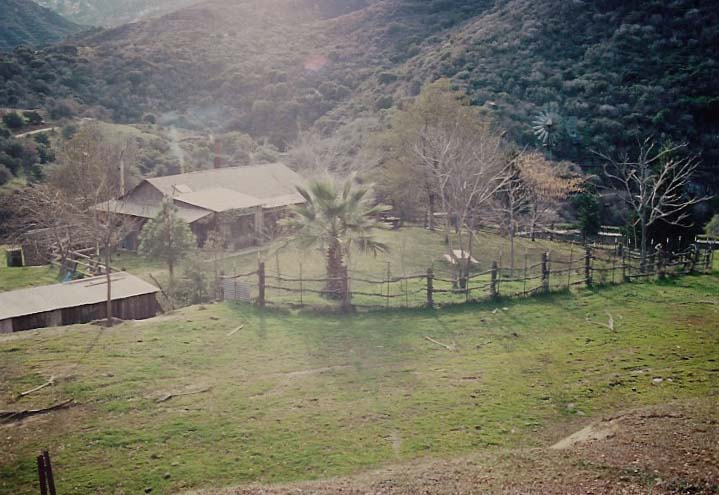
By 1939, all but four camps, including the Cain’s Flat Camp, had been closed in the Sequoia area. As the depression eased and the nation began to focus on possible war efforts, Cain’s Flat once again reverted to the quiet, secluded ranch that it remains today.
(CREDITS: “Heading for the Hills” by Alice Jackson; seasonal Narrative Reports. E.C.W. and C.W.A. Projects, Sequoia National Park;, Nov. 1933 to April 1937; “Visalian and CCC Work Crews Left Mark…” by Jim Carnal, Visalia Times-Delta, Aug. 4, 1983; “The Story of the CCCs in Kaweah Country”, by Jay O’Connell, The Kaweah Commonwealth issues April 23, May 21, June 4, July 2, Aug. 6, 1999; “New State Museum for CCCs”, The Kaweah Commonwealth, July 7, 1995; Memorandum from Director, Calif. Forest and Range Experiment Station, San Dimas Experimental Forest to Forest Supervisors, Region Five, Division Chiefs, Regional Office. Photos from NPS and Jackson files. Compilation by Louise Jackson. )